The purpose of this presentation is to give a general background of how lasers work and why they are particularly effective in surgical procedures. The presentation is not a replacement for a physician training class or a hospital-sponsored laser safety class.
The scope of the discussion in this section is limited to the use of the Convergent holmium and diode laser products in surgery.
Properties of Laser Light
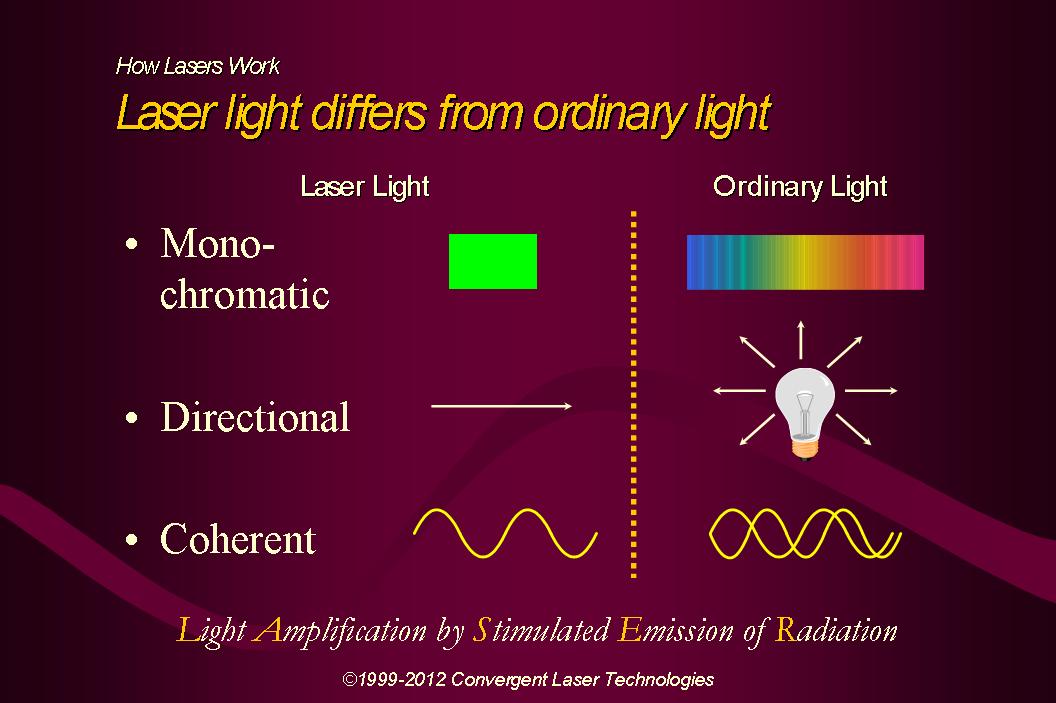
Laser light is mono-chromatic, meaning that the light energy is concentrated within a very tight spectral (wavelength) band. Since water, and by extension, tissue interacts with different light wavelengths differently, a specific laser wavelength is chosen to achieve certain clinical results. For example, if tissue ablation is desired, selecting a laser wavelength that is highly absorbed by water creates the required ablation effect.
Laser light is also directional and coherent, which means that it can be targeted accurately and with very high intensity. In a clinical environment, laser light is delivered only where needed thereby minimizing any collateral tissue damage.
ProTouch & LiteTouch Diode Laser
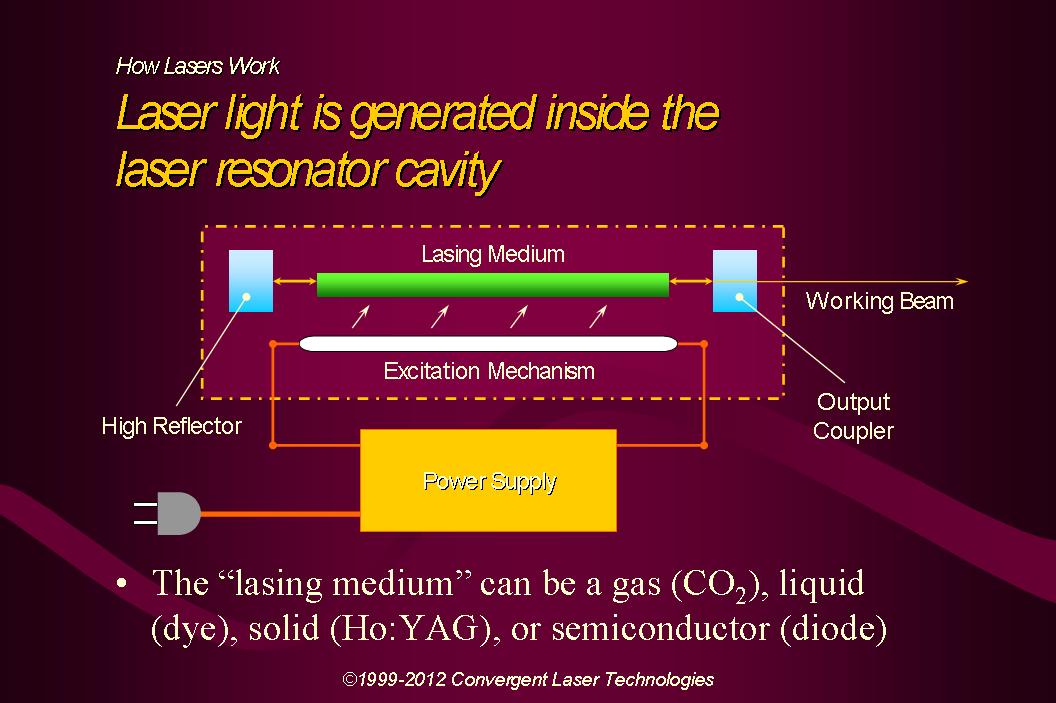
The T-1470 lasers use a semiconductor device similar to the familiar LED to generate laser power. Instead of using a flash lamp to provide the initial energy, electricity from the wall outlet is modified by the laser's power supply and directly coupled to the semiconductor material. The semiconductor, or diode, is constructed to act like a resonant cavity, and the injected electrons from the power supply interact with the diode materials to produce photons. These photons resonate within the diode at the microscopic junction between the two dissimilar compounds that make up the diode structure. Laser power is then emitted from the diode at its polished end. As with the holmium laser, the output coupler directs the laser energy through a connected fiberoptic system to the target.
The working laser beam produced by the 1470nm diode laser system is invisible. Both the Vectra and the Odyssey laser products emit a coaxial (along the same optical axis) visible aiming beam to help you target the working beam with the attached fiberoptic instruments.
Odyssey Holmium Laser
The Odyssey 30 is a free-running, flash lamp pumped, solid-state laser. Electricity is drawn from the wall outlet and is used to charge a capacitor bank inside the power supply. When the user depresses the foot switch, the charge energy is used to light the flash lamp in the laser cavity. The light from the flash lamp is then used to excite the lasing medium, which starts the "lasing" action. Excited light photons reflected between two mirrors within the resonator cavity undergo a self-perpetuating process called resonance, which generates amplified energy in the photons being emitted from the cavity as the laser beam. The output coupler then allows a measured amount of laser energy out of the cavity through the attached fiberoptic system and delivers the working laser beam to the target.
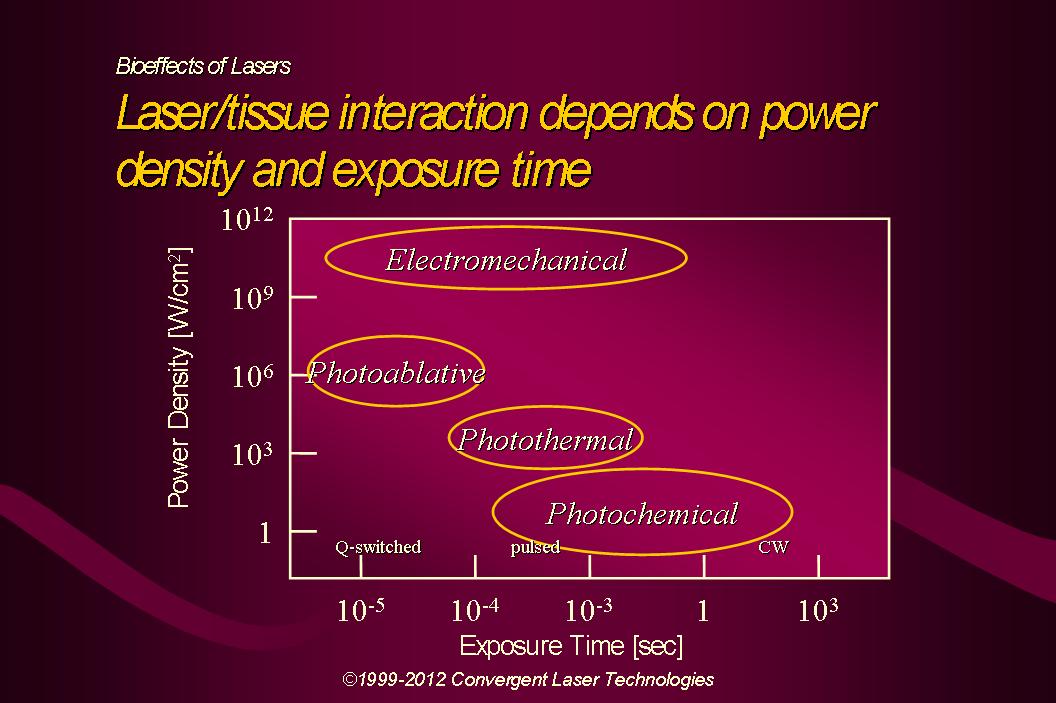
The wavelength of the laser is of primary importance in determining how tissue reacts to laser energy. In addition, the power density and exposure time also play a critical role in determining tissue interaction.
These tissue interaction terms are used to describe the mechanism of action when lasers are directed at target tissue:
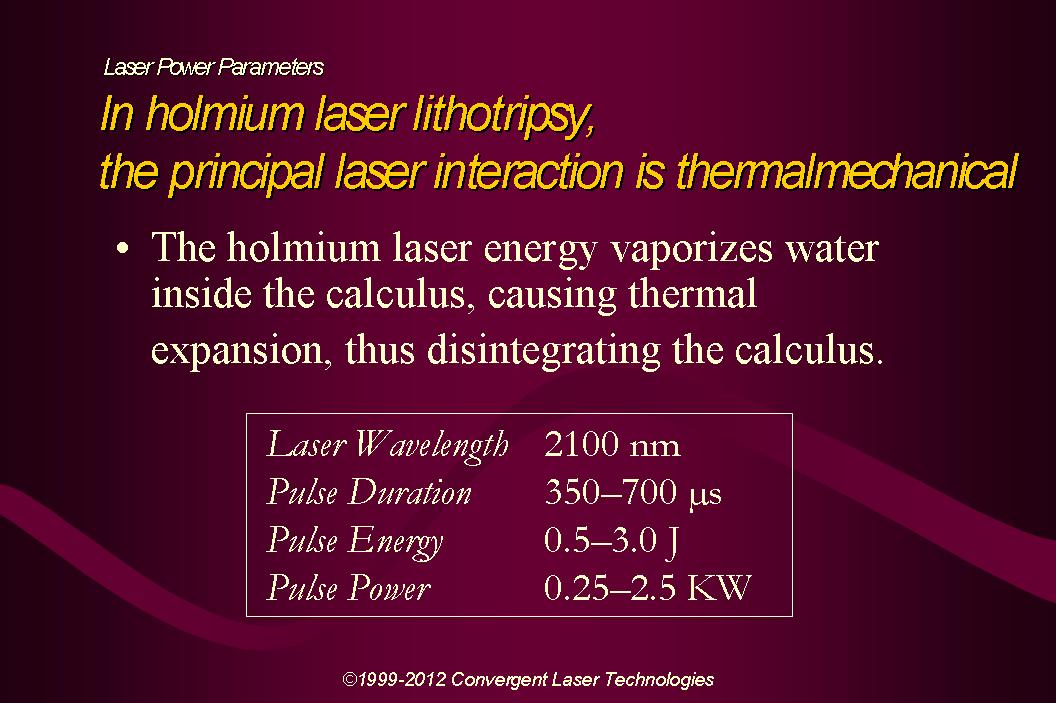
Thermomechanical: laser energy causes structural breakdown in tissue caused by shock wave plasma expansion, resulting in localized mechanical rupture.
Photoablative: laser energy causes photodissociation or breaking of the molecular bonds in tissue.
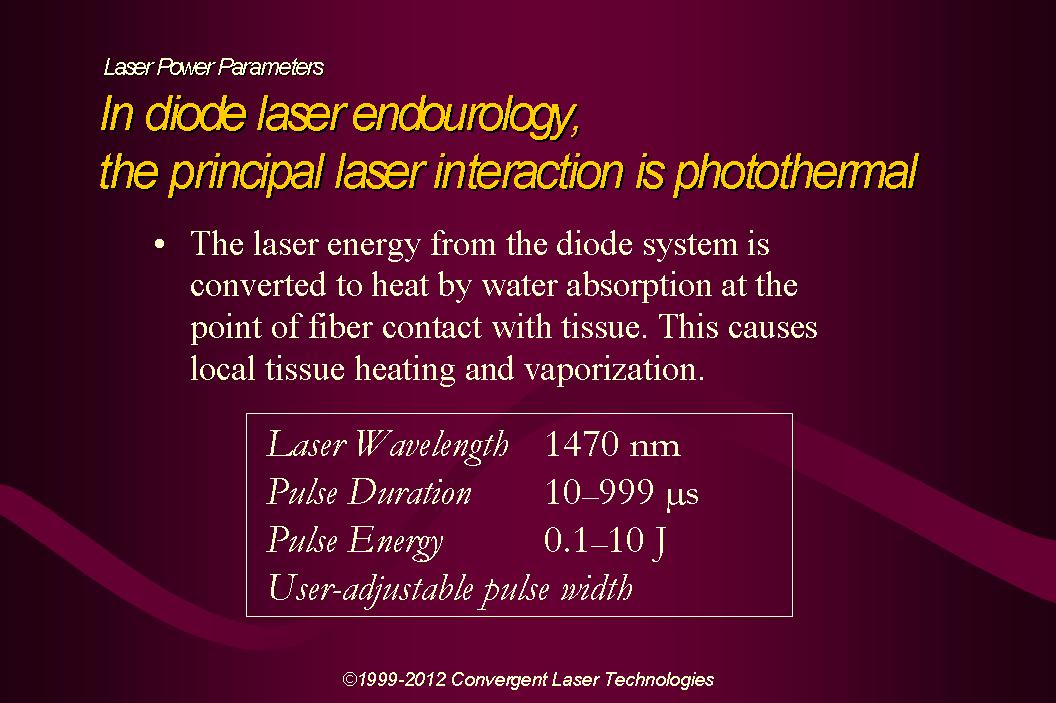
Photothermal: laser light energy is converted into heat energy by absorption of the energy by the tissue target. This causes the tissue to heat up and vaporize.
Photochemical: laser energy initiates or promotes specific light-induced chemical reactions in the target tissue, causing cell dissolution or destruction.
Holmium Laser in Lithotripsy
The holmium laser, being a long-pulsed laser, creates thermal interactions with tissue. In the case of urinary tract lithotripsy, the laser heats up and vaporizes water on the surface and within the calculus, the water expands and the expansion causes the calculus to disintegrate.
The Odyssey has a 350 µs pulse duration optimized for stone fragmentation while other holmium lasers are set closer to the 250 µs range. Clinically for lithotripsy, there is minimal difference between a 250 and 350 microsecond holmium laser.
The Odyssey contains a special feature that allows the operator to extend its pulse duration. For soft tissue applications, the clinician may want the laser to create more coagulative tissue effects, to decrease bleeding for instance. By increasing the laser exposure time to tissue, the same amount of laser energy can be delivered using a much lower peak power. The peak power still remains above the ablation threshold of water, yet the tissue has more time to absorb the laser energy.
Several peer reviewed articles have reported that the 700 µs pulse duration reduced retrograde stone migration and reduces treatment time.
Anatomy of a Laser Pulse
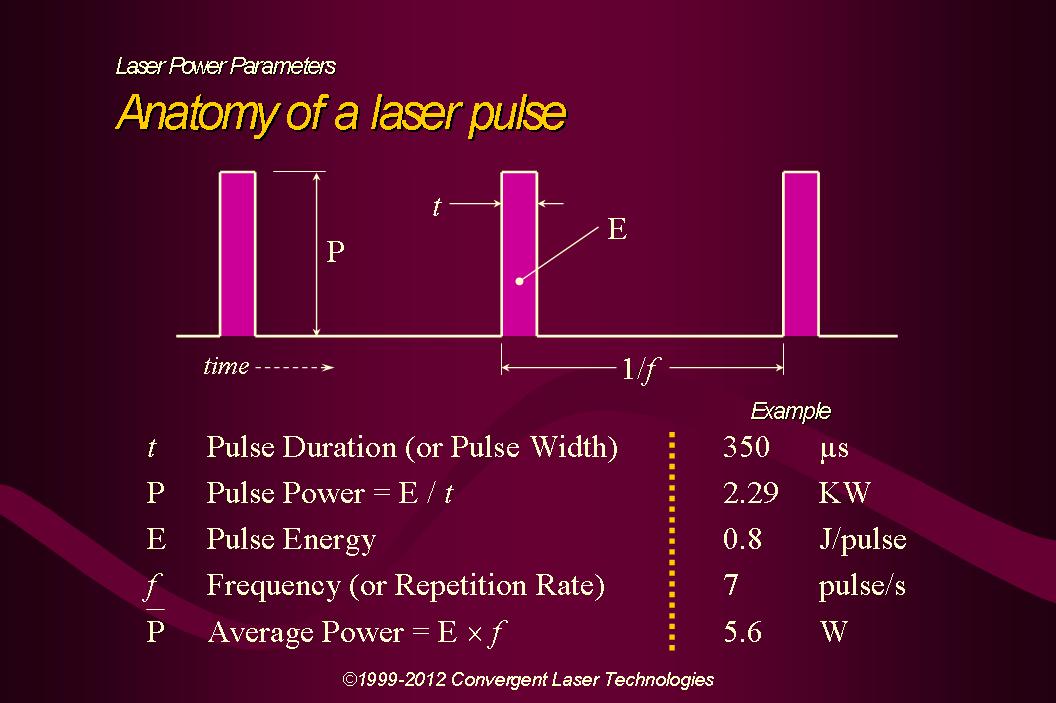
This diagram depicts a time line of laser pulses. Because most holmium lasers operate between 5 to 30 Hz, most of the time (>98%), the laser is actually not firing. If you set the control panel to 7 Hz and 0.8 J/pulse, the average power is calculated by multiplying the frequency with the pulse energy, or 5.6 W. However, the average power parameter is not an important factor in laser lithotripsy, because each laser pulse operates independently of each other. The more important factors are pulse energy and pulse duration.
Understanding Energy Density
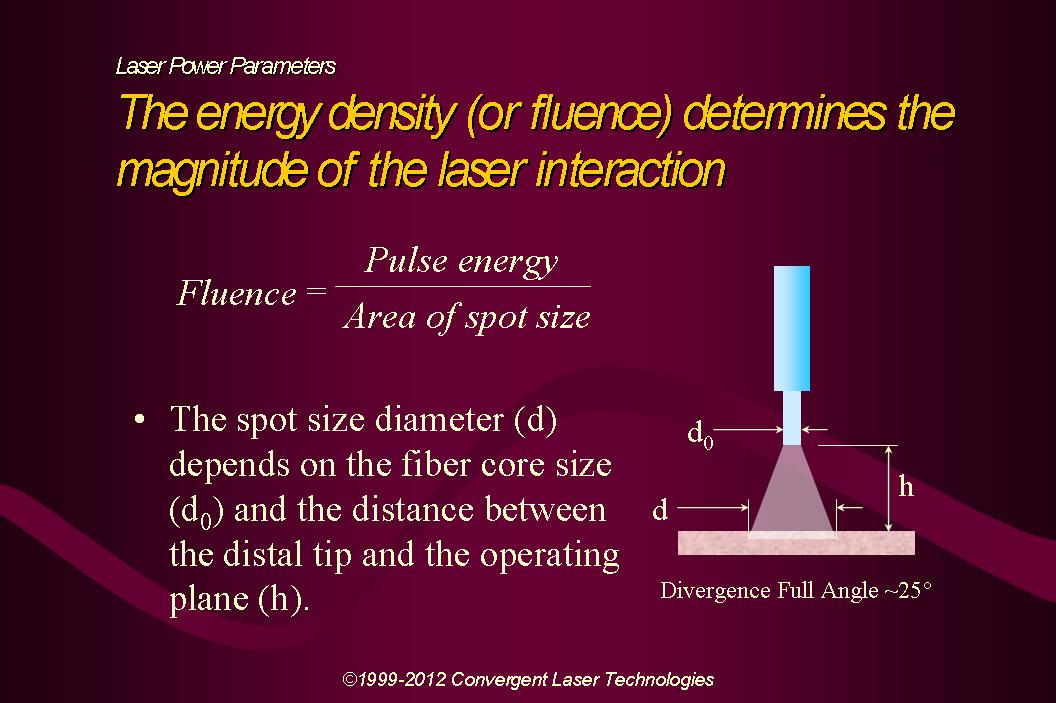
Energy density is one of the most important parameters in laser surgery. Understanding how the laser energy is "spatially" delivered is key. One Watt of energy delivered over a square-foot is insignificant to tissue. However, one Watt of energy delivered in spot the size of a pin-head will drill a hole in tissue. For fiber-delivery lasers such as the Odyssey, the relevant spatial parameters are the fiber core diameter and the distance from the operating plane. The fluence, calculated by this formula, determines the magnitude of the laser interaction.
Ocular Hazards
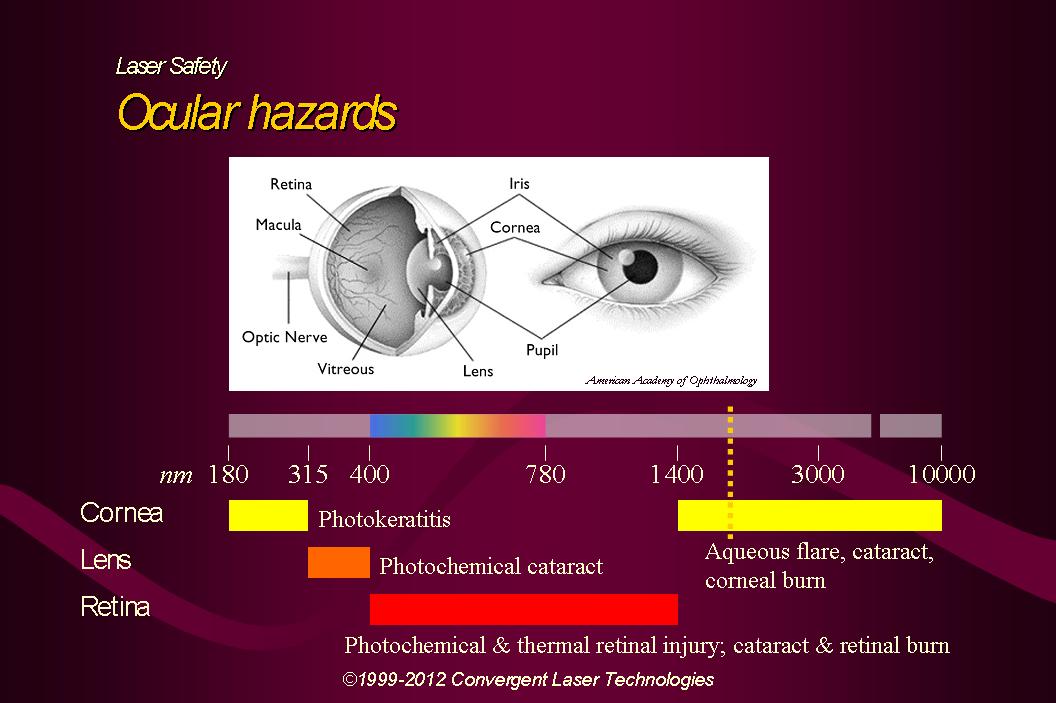
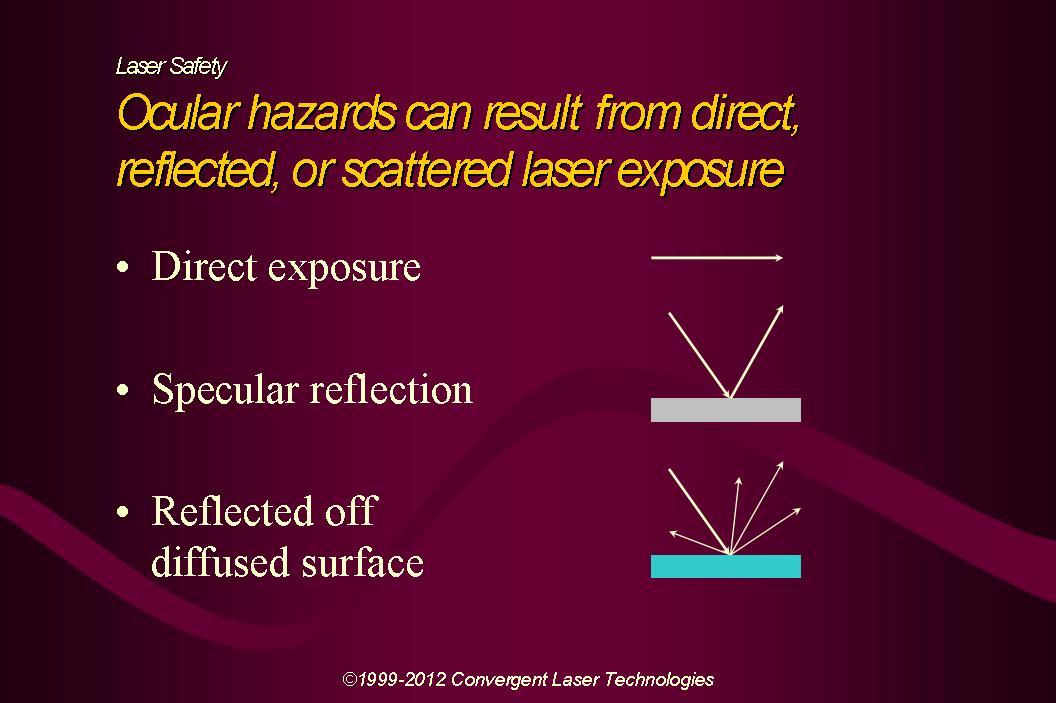
The laser beam is mono-chromatic, directional and coherent which can serve as a precision clinical tool. These same properties make it a potential hazard to your eyes. Think of your eye as a special type of tissue. The eye's interaction with laser energy also depends on the laser's wavelength. The yellow dotted line indicates where the holmium laser (2100 nm) falls in the electromagnetic spectrum. Holmium laser energy will be absorbed by your cornea. Under prolonged exposure, aqueous flare, cataracts, or corneal burn may occur.
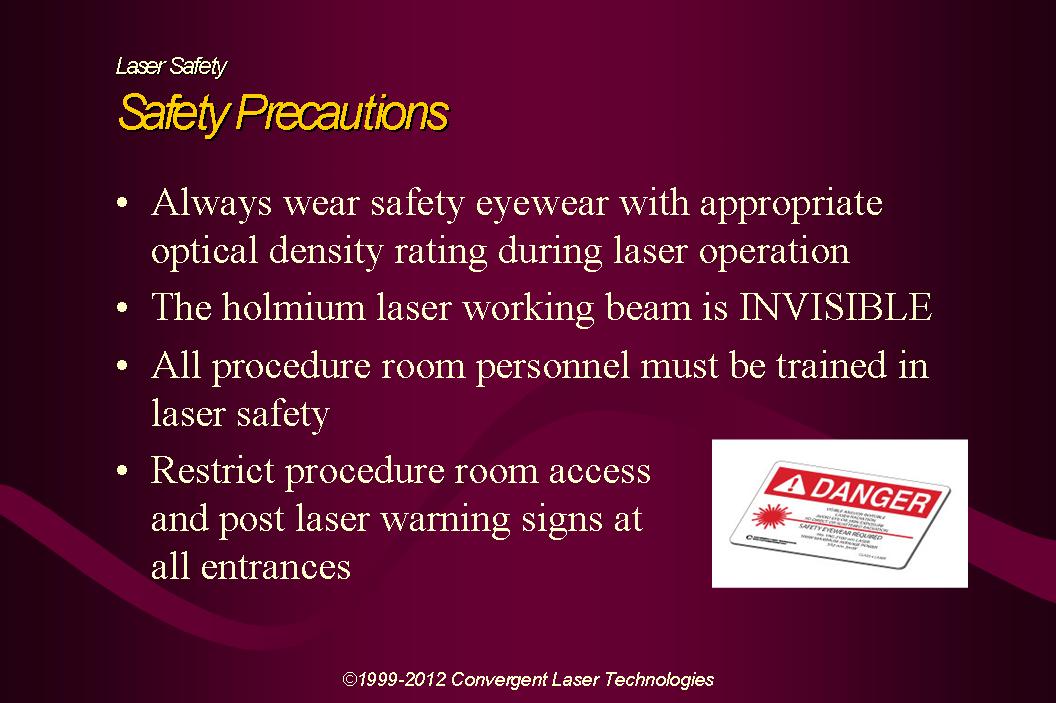
Both the 2100nm holmium laser beam and the 1470nm diode laser beams are INVISIBLE. Never stare directly at the working beam or point the fiber tip at any unintended targets.
All procedure room personnel, including the patient, should wear appropriate laser safety eyewear while the laser is in operation, even if the procedure is being done endoscopically.
Skin Hazards
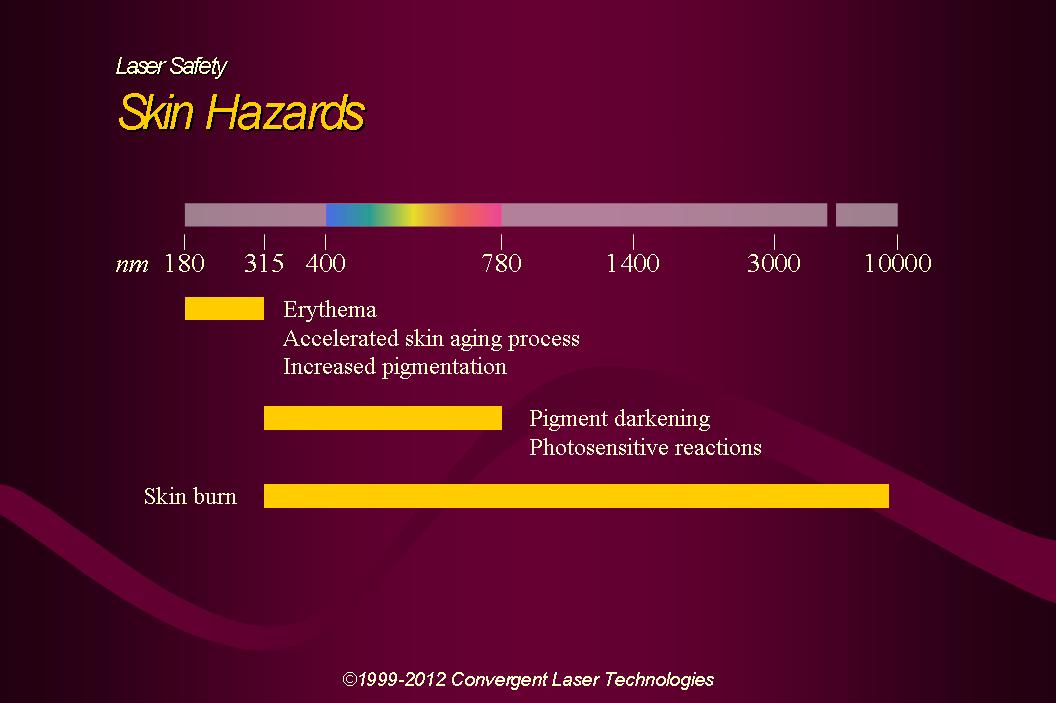
Direct the distal tip of the fiber only at the surgical target. Laser exposure on unprotected skin may cause severe skin burns.
Other Hazards
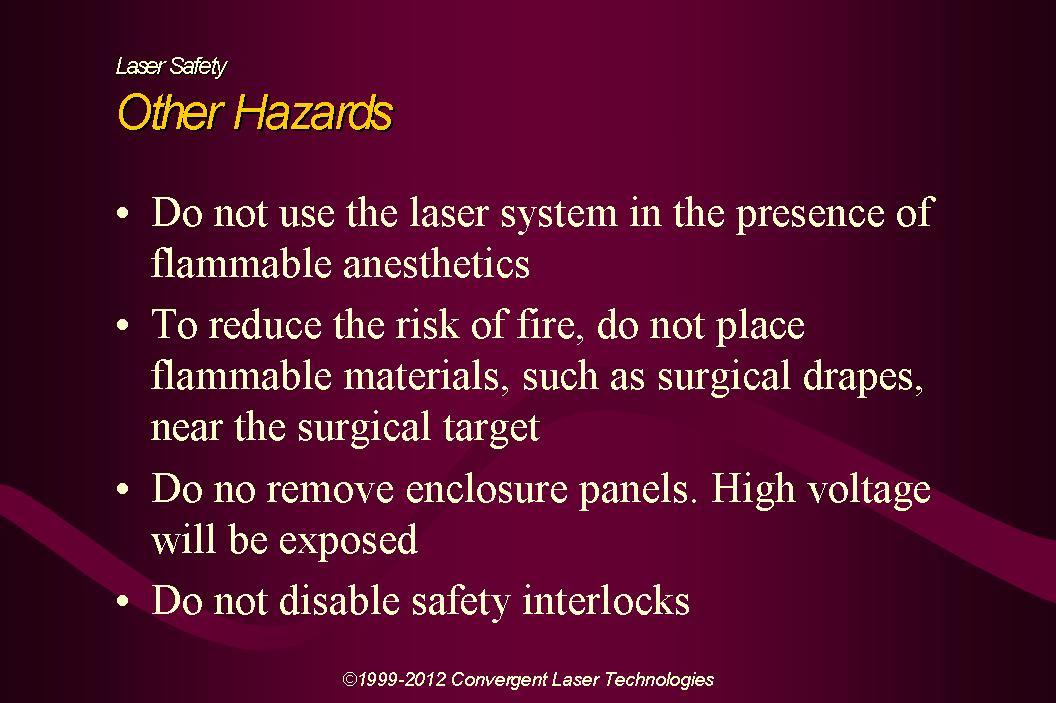
Refer to your User's Manual for additional safety information. If you have additional questions or concerns, contact your site's Laser Safety Officer.
Contact
Convergent Laser Technologies 1660 South Loop Road Alameda, CA 94502